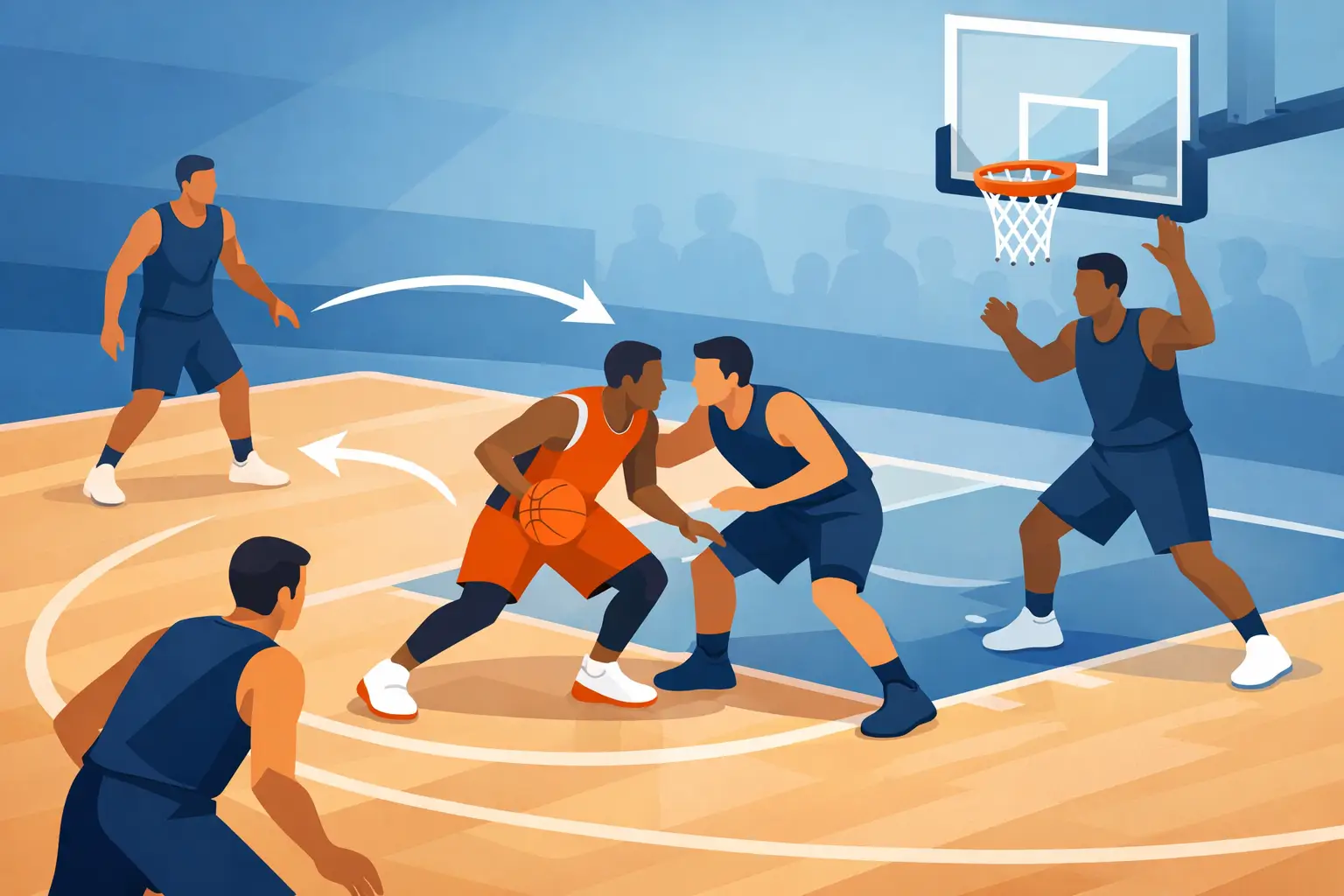
A player beats the first defender, gets two feet in the paint, and then forces up a contested layup into a waiting big. The drive was not the problem. The missed read was. To teach help defense reads, players must learn that beating their matchup is only the first part of the play. Their next decision depends on where the second defender comes from and which teammate that defender leaves open.
For middle and high school players, this is one of the fastest ways to become more effective without needing a new dribble move or a higher vertical. Great decision-makers see help early, keep their spacing organized, and deliver the pass before the defense can recover. That skill is built through clear visual cues, film repetition, and game-like practice constraints.
Start With What Help Defense Is Taking Away
Young players often hear, “Make the extra pass,” but that instruction can become automatic and unhelpful. Not every drive needs a pass. If the on-ball defender is beaten and no one steps in to protect the rim, the correct read may be to finish. If a defender helps but stays close enough to recover to the shooter, a rushed pass can create a turnover.
Help defense is a defender leaving or shading away from their primary offensive assignment to stop the ball, protect the paint, or take away a more dangerous scoring threat. The offensive player’s job is to identify three things: who helped, how far they helped, and what teammate was left available because of it.
That creates a simple decision sequence: attack the gap, locate the helper, then punish the space the helper abandoned. Players should not decide to pass before they know what the defense has done.
For parents watching from the stands, this changes the way a possession looks. A missed shot is not always a bad decision, and an assist is not automatically a great one. The better question is: did the player recognize the help defender and make the best available read before the defense reset?
Teach Help Defense Reads From the Ball Handler’s Eyes
The best lessons begin with a specific perspective. Freeze film just before the driver reaches the paint. Ask the player, “Who is responsible for helping at the rim?” Then let the clip run and ask, “Which teammate did that defender leave?”
Avoid starting with five options. Give players one repeated read at a time until they can name it quickly and execute it under pressure. The goal is pattern recognition, not memorizing a list of passes.
Read the low defender first
On many drives, the most important helper is the low defender on the weak-side block or near the basket. When the ball handler attacks from the wing, that defender often has to step up to stop a layup. If they fully commit to the ball, the baseline teammate or dunker spot player becomes available behind them.
The key word is fully. A defender taking one step toward the paint is not always open enough to justify a pass. Teach players to watch the defender’s hips and feet. If both feet turn toward the driver and the defender leaves their assignment, the passing window is real. A quick drop-off, dump-off, or short pass can lead directly to a finish.
Recognize the nail helper
The nail is the middle of the free-throw line area. Defenses use a player at the nail to discourage straight-line drives and force the ball handler into traffic. When that defender leaves a shooter on the perimeter to stunt or fully help, the open teammate is often one pass away from the ball.
This read is especially important for guards. A nail defender may show help, then try to recover. That means the ball handler needs pace and patience. Rather than jumping into the paint and passing late, teach players to get downhill under control, keep the ball protected, and make the pass as the helper commits.
A strong pass to the perimeter is usually on time when it reaches the shooter before the recovering defender can close out under control. Late passes turn a clean catch-and-shoot opportunity into a contested catch, extra dribble, or turnover.
See the corner defender’s decision
Corner defenders have a difficult job because they are often asked to help protect the basket while still covering a valuable three-point shooter. When a corner defender tags a cutter, rotates to the rim, or sinks too far into the lane, the corner is open.
Players should not stare at the corner while they drive. Teach them to use their eyes intelligently. Attack the rim first, feel the corner defender’s movement in their peripheral vision, and deliver a firm pass when the defender’s body turns inward. If the defender stays home in the corner, the driver may have a clear lane or a different teammate open.
Separate help, stunt, and switch
Not every defender who moves toward the ball has actually abandoned an assignment. A stunt is a brief fake help movement meant to make the ball handler hesitate. A switch changes matchups and may eliminate the passing window the offense expected. Full help means the defender has committed enough that another offensive player is now open.
This distinction matters because inexperienced players often pass to the first teammate they see after any defensive movement. Teach them to ask, “Did the defender really leave, or did they just show me a body?” The answer determines whether to pass, keep driving, pull up, or reset the offense.
Build the Read Before You Build the Drill
A common mistake is putting players into a live 5-on-5 drill before they understand the picture. They may get repetitions, but they can repeat poor decisions just as quickly as good ones. Start with a controlled advantage, then add complexity.
In a 3-on-3 setup, place a ball handler on the wing, a teammate in the corner, and a teammate in the dunker spot or opposite short corner. Add one on-ball defender and two help defenders. The coach can initially instruct the low defender to help on every drive. The ball handler’s responsibility is to get downhill, see the help, and make the simple pass to the player left open.
Once that pattern is clear, change the defense. Let the low defender stay home while the corner defender rotates. Then have the nail defender stunt and recover. The offense should not know which coverage is coming. That is when players move from running a drill to making a read.
Use a short pause after each rep. Ask the ball handler what they saw before giving feedback. If they can explain, “The low defender stepped up, so I hit the dunker,” they are developing a transferable habit. If they only say, “Coach told me to pass there,” the learning has not reached decision-making yet.
Use Film to Slow Down the Moment
Live basketball moves too fast for a player to process a new concept the first time. Film gives them a chance to see the same moment without the pressure of a defender closing space.
A productive film sequence is short. Show the drive, pause at the first step into the lane, and ask the player to predict the help. Resume the clip and identify whether the passer read it correctly. Then replay the possession from the off-ball teammate’s perspective. This matters because spacing creates the passing lane.
A corner player who drifts too high can bring their defender closer to the ball. A dunker spot player standing directly under the rim can crowd the driver’s finishing space. Help defense reads are not only the ball handler’s responsibility. Every player needs to understand how their location gives the driver a clear answer.
At C-Buckets Hoops IQ Lab, the most useful film lessons keep the question focused: What did the defense take away, and what did it give up? That question helps young players connect a clip on a screen to the next possession they play.
Coach the Pass, Finish, or Pull-Up Decision
The correct answer is not always a kick-out pass. Players need permission to finish when the rim is unprotected and to use a pull-up when the big defender retreats into the paint. Otherwise, they become predictable drivers who pass away good scoring chances.
Teach a simple scoring hierarchy: finish when the rim is open, pass when a helper fully commits, and use the pull-up when the defender backs up enough to give space but still protects the rim. The exact answer depends on the player’s skill level, the lineup’s shooting, the time and score, and the defense’s coverage.
A smaller guard may need to make an earlier pocket pass against a shot blocker. A strong wing may be able to absorb contact and finish through late help. The principle stays the same: read the second defender, not just the first one.
Measure Better Decisions, Not Just Assists
A player can make the right help-defense read and still not get an assist because a teammate misses an open shot. They can also collect an assist on a pass that was late or risky. Coaches and parents should praise the quality of the read first.
After a game, review a few paint touches. Did the player identify the low man? Did they see the nail help? Did they maintain their dribble until the passing lane opened? Over time, those questions create more value than simply counting points or assists.
The player who sees help one beat earlier plays calmer basketball. Give them enough film reps to recognize the picture, enough guided practice to test the decision, and enough freedom in games to learn from the result. That is how a young athlete starts making the defense feel late instead of overwhelming.
Leave a Reply