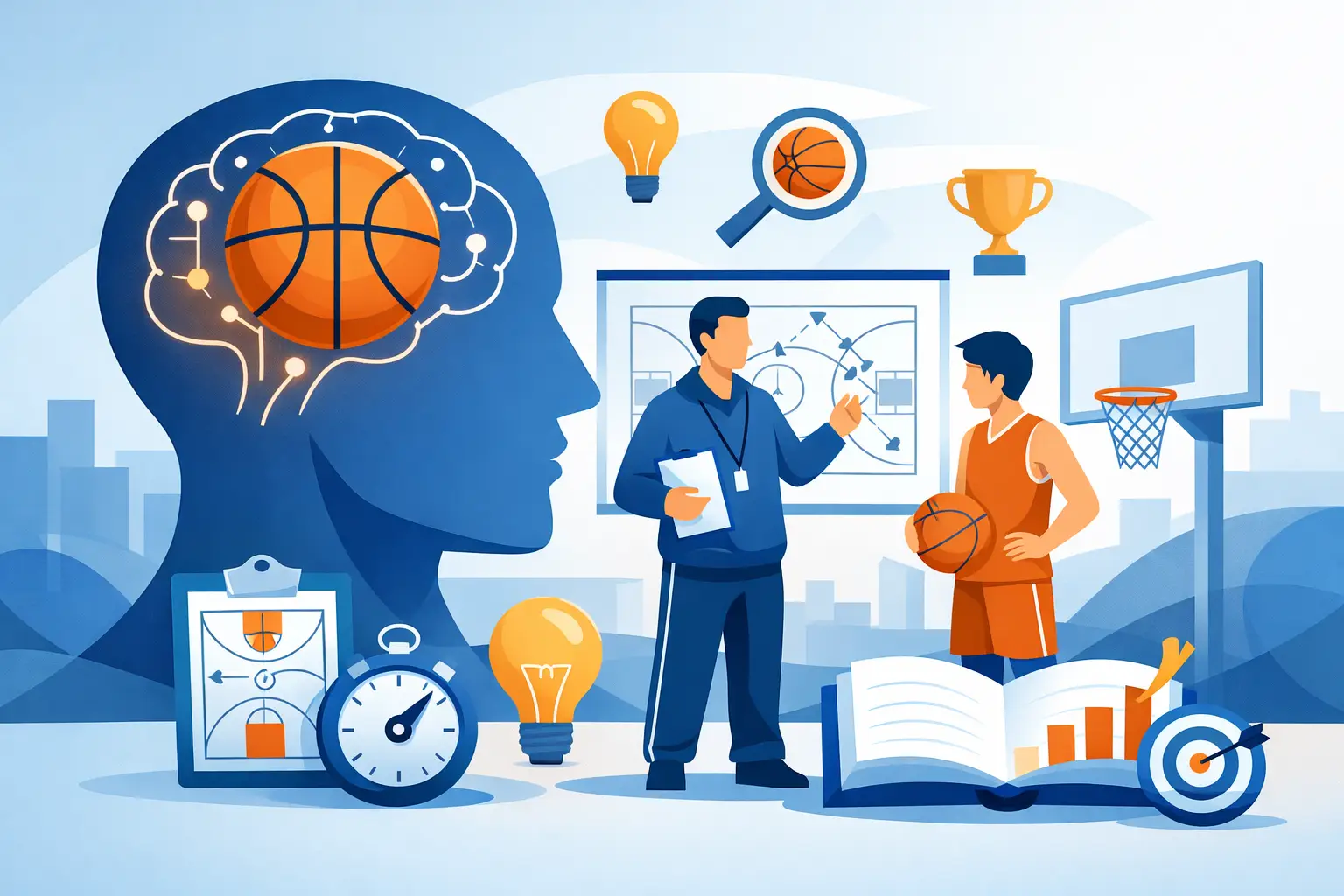
A lot of players work hard and still look a step late on the court. It is rarely because they do not care. More often, they have never been taught how to actually see the game. A strong basketball iq training program fills that gap by teaching players what to read, when to react, and why certain decisions create better results than others.
That matters even more for middle school and high school athletes. At those levels, the difference between average and impactful players is not always speed, vertical jump, or flashy handles. It is often recognition. The player who sees the help defender early, understands spacing, and knows the next pass before the catch usually plays faster without rushing.
What a basketball IQ training program really does
Most skill training focuses on execution. Can you make the pass, hit the shot, or finish the layup? Those things matter. But games are built on choices. Before the pass, shot, or drive happens, a player has to process the defense, identify the advantage, and make the right read.
That is where IQ training becomes valuable. A quality program teaches players how to recognize common situations instead of memorizing random moves. It helps them understand why a corner should stay lifted, why a weak-side defender matters on a drive, and why one extra dribble can ruin an advantage.
This is also why film study is such an effective tool. Players can slow the game down, study patterns, and build visual memory. When they see the same coverage or rotation in a live game, it feels familiar. They are not guessing. They are recognizing.
The best basketball IQ training program starts with reads
If a program claims to build basketball intelligence, it should not start with complicated playbooks. Young players do not need more clutter. They need a better framework for reading the game.
The first layer is learning how to identify defenders. Who is guarding the ball? Who is in help? Who is tagging the roller? Who is zoning up two players? These are not advanced ideas reserved for college or pro athletes. They are practical reads that show up in school and club basketball every week.
The second layer is learning how offensive spacing affects those reads. Good spacing creates longer closeouts, cleaner driving lanes, and easier passing windows. Poor spacing shrinks the floor and makes every decision harder. A smart player starts to understand that basketball IQ is not only about what to do with the ball. It is also about where to stand, when to move, and how to avoid bringing an extra defender into the play.
The third layer is timing. Even the right read can fail if it is late. A player might correctly see the skip pass, but if the ball comes out after the defense has already recovered, the advantage is gone. That is why the best teaching shows not just the correct choice, but the correct moment.
Why film study works better than pure lecture
Players hear coaching points all the time. Move the ball. Space out. Make the extra pass. Read the help. Those phrases are useful, but they can stay too abstract if athletes never see them in real game situations.
Film changes that. It gives players a clear picture of what a bad read looks like, what a good read looks like, and what caused the difference. That is especially helpful for young athletes who are still learning how the game connects. One possession can show spacing, help defense, shot selection, and timing all at once.
Short, guided breakdowns tend to work better than long, overloaded sessions. Players can absorb one concept, connect it to a visual example, and apply it in practice. Parents also benefit from this format because it helps them understand what their athlete is being taught without needing a coaching background.
That education piece matters more than people think. When parents understand reads and spacing, their feedback becomes more useful. Instead of saying, shoot more or be aggressive, they can ask smarter questions. Did you see the low man rotate? What made that passing angle difficult? Why did that driving lane close? Those conversations support development.
What young players should learn first
A basketball iq training program should be age-appropriate. That does not mean watered down. It means organized in the right order.
Young players usually improve fastest when they start with a few core ideas: spacing, advantage recognition, help defense reads, transition decisions, and off-ball movement. These show up constantly, no matter what team or system they play in.
Spacing teaches players how to stay available and keep the floor functional. Advantage recognition teaches them to identify when the defense is already compromised. Help defense reads teach them where the next pass should go. Transition decisions help them avoid wild possessions and wasted numbers advantages. Off-ball movement teaches them that standing still is often part of the problem.
Once those habits improve, more advanced topics make sense. Pick-and-roll reads, split action decisions, screening angles, and weak-side manipulation become easier to learn when the player already understands the basic logic behind offensive flow.
What separates a useful program from empty basketball content
Not every training product that uses the word IQ actually teaches basketball intelligence. Some content sounds smart but gives players nothing they can use in a game. A useful program is specific. It shows the read, explains the cue, and connects that idea to a repeatable habit.
For example, telling a player to be patient is vague. Showing them how to keep a defender on their back, force the low help to commit, and deliver the pass on time is useful. Telling a player to improve decision-making is broad. Teaching them to read the second defender and know whether the corner is occupied or empty is actionable.
The best instruction also respects the trade-offs in the game. Sometimes the right pass is not possible because the spacing was poor. Sometimes the shot is technically open, but it is the wrong rhythm or the wrong shooter. Sometimes a possession breaks down and the best available option is simply solid, not perfect. Good basketball teaching prepares players for those gray areas.
That is one reason guided film study stands out. It helps athletes understand not just what happened, but what changed the possession. One defender stunts early. One offensive player drifts too high. One unnecessary dribble shifts the timing. Those details decide possessions.
How players know it is working
Improved basketball IQ does not always show up first in points per game. Sometimes it shows up in fewer rushed drives, better shot quality, stronger passing decisions, and cleaner defensive rotations. Coaches notice that. Teammates notice that too.
A player with growing court awareness usually starts making the game easier for everyone around them. The ball moves cleaner. Spacing improves. Turnovers drop. Closeouts become more controlled. That player may not always have the loudest stat line, but they help possessions function.
Over time, the results become more visible. Better reads lead to better efficiency. Better positioning leads to more catch-and-shoot opportunities. Better timing leads to more assists and fewer empty trips. These are the signs that learning is transferring from the screen to the court.
For families looking at a program, that transfer is the real standard. Does the athlete understand the lesson on video, then apply it in practice and games? If the answer is no, the content may be interesting but not developmental.
Who benefits most from this kind of training
Players benefit most when they are coachable, curious, and willing to study the game beyond their own highlights. This type of training is especially valuable for athletes who feel stuck between effort and results. They practice hard, but they still struggle to read pressure, find teammates, or stay under control in game situations.
It also helps players who want to become more complete, not just more skilled. A good handle matters. A reliable jumper matters. But those tools become much more effective when the player understands when and why to use them.
Parents benefit when they want a clearer view of how development actually works. Not every problem is solved by more reps. Sometimes the missing piece is understanding. A player can spend hours on moves and still make poor decisions if nobody teaches them how to process the floor.
That is why programs built around guided film study can be so effective. At C-Buckets Hoops IQ Lab, the value is not just in showing the game at a high level. It is in translating those concepts into lessons that middle school and high school players can actually use.
The smartest players are not guessing less because the game is easy. They are guessing less because they have trained their eyes, their timing, and their decisions. That kind of improvement lasts longer than a hot shooting week, and it travels to every level of the game.
Leave a Reply